
Take a Little Piece of Dorset Home
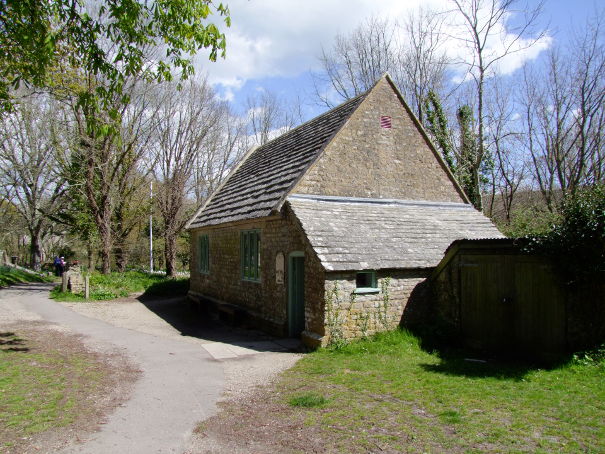
Love exploring Weymouth and Dorset? Take home beautiful coastal photography, digital artwork and local prints from my Folksy store.
Prices start from just £8.50 and include Weymouth Harbour, Weymouth Beach, Portland, Dorset landscapes and many more local scenes.
Shop All Dorset Prints →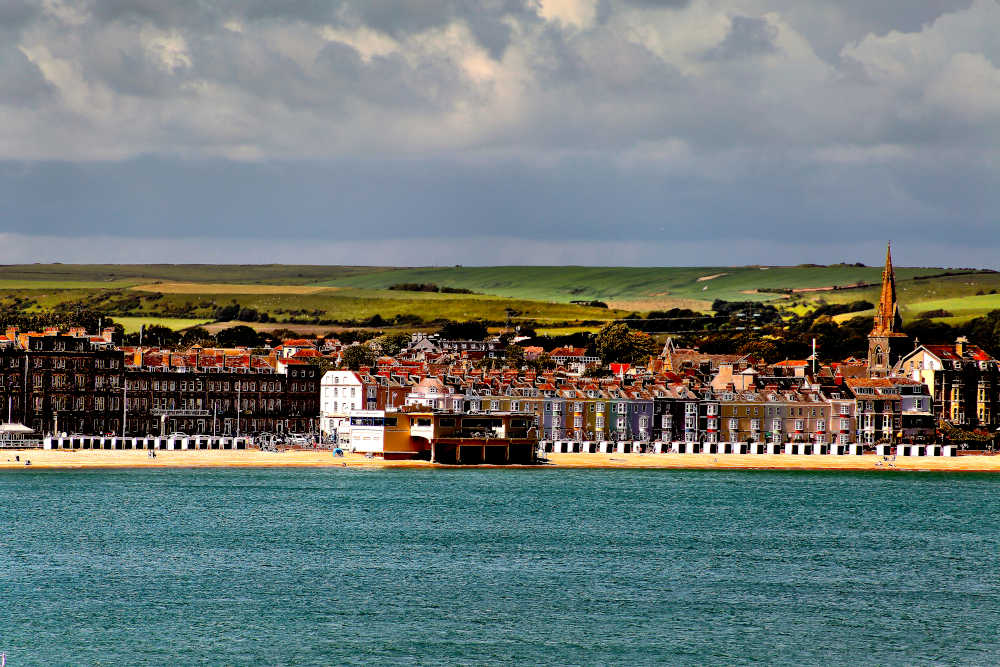




Tyneham Church & School
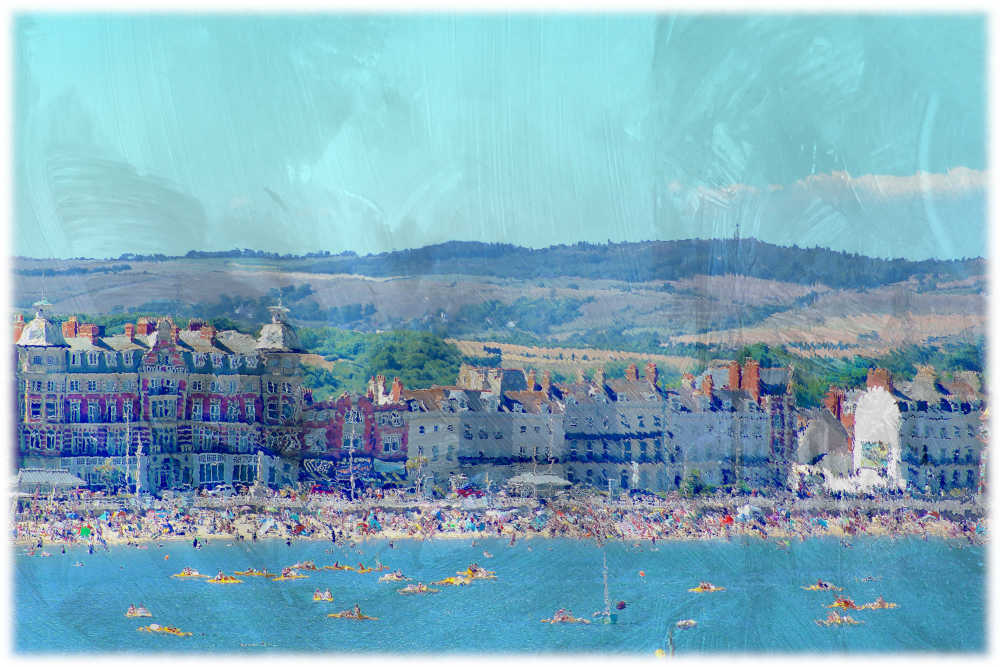
Tyneham Church and Tyneham School are two of the most fascinating surviving buildings in the abandoned village of Tyneham. Unlike the ruined cottages of the village, both buildings have been carefully restored, allowing visitors to step inside and experience what life was like before the village was evacuated in 1943.
Together, the church and school offer a rare glimpse into the daily life, community spirit and history of a village that was lost during the Second World War when the entire Tyneham Valley was requisitioned for military training.
Standing in these buildings, it is easy to imagine the history of the village, from the footsteps of children walking to their desks to harvest festivals and weddings held in the church.
Planning your visit to Tyneham? Start with our Tyneham Village guide or take the scenic walk to Worbarrow Bay.
Tyneham Church
St Mary's Church stands quietly at the heart of Tyneham Village and remains one of its most atmospheric and moving places to visit. Although the village was evacuated, the church was never fully abandoned and has since been restored as both a place of reflection and a small visitor exhibition.
Inside the church, visitors can discover displays about village life and the families who once lived in the Tyneham Valley. One of the most powerful features is a replica of the original note left on the church door by the villagers, asking that their homes and belongings be treated with care when they were forced to leave.
The churchyard overlooks the surrounding valley, offering a peaceful view of the hills and countryside that once supported generations of farming families. It remains one of the most reflective spots in Tyneham.
A Harvest Festival At Tyneham Church (Wander back and imagine what life was like)
Imagine Tyneham Church on a warm autumn afternoon during harvest time in the early 1900s. The church is decorated with sheaves of wheat, garden flowers, apples and vegetables brought in from across the valley. The scent of the countryside fills the small stone building as villagers gather for the annual Harvest Festival service.
Outside, the sounds of rural life continue in the valley below - carts returning from the fields, horses being led back to the farm, and the distant calls of children playing near Post Office Row. Inside the church, families sit together on wooden pews, their clothes still dusted with the remnants of the day's work.
The vicar gives thanks for the harvest and the land that sustains the village. For many families in Tyneham, farming is not just work but survival, and the harvest service is one of the most important gatherings of the year.
As the service ends, villagers spill out into the churchyard where neighbours catch up, children run between gravestones, and the golden light of late afternoon settles over the valley. It is a moment of community, gratitude and quiet rural life in a village that would one day be lost to history.
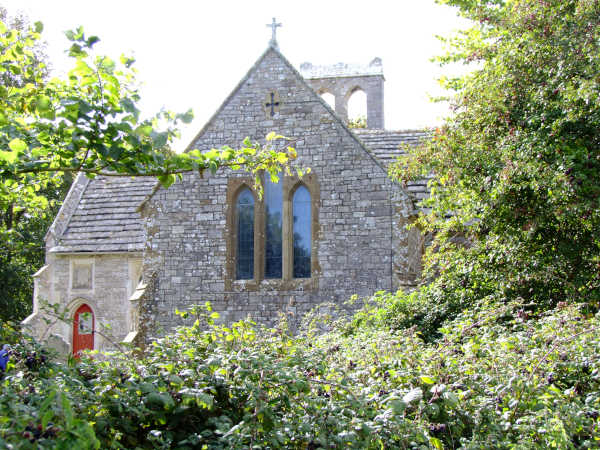
Tyneham Church remains one of the most peaceful and atmospheric buildings in the abandoned village.
Tyneham School
A short walk from the church brings you to Tyneham School, a small rural classroom that has been carefully preserved to appear as though the children have just stepped out for break time.
The school was originally built in the 1850s to educate children from Tyneham and nearby Worbarrow. At its peak, it served a small number of pupils from farming and fishing families across the valley.
Today, the classroom is set out with wooden desks, schoolbooks, and writing materials left in place. Along the coat pegs, visitors can still see the names of the children who once attended lessons here, giving a deeply personal connection to the village's past.
The school logbooks also tell the story of daily life, including how attendance would often drop during harvest time when children were needed to help their families in the fields.
The real names upon the childrens coat pegs in the school cloakroom offer a particularly poignant memory of past lives in the village.
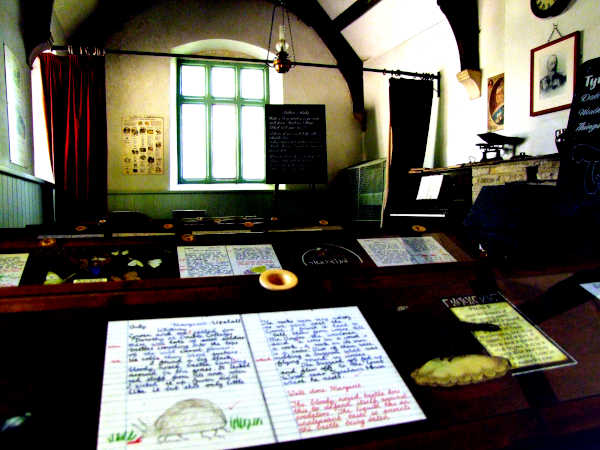
What School Life Was Like In Victorian Rural England
When Tyneham School was first built in the 1850s, rural village schools like this were very typical across Victorian England. Small schoolrooms often served children of all ages together, with one teacher responsible for the entire class.
Lessons were usually simple and focused on reading, writing and basic arithmetic. Children often worked from slates or copybooks, and discipline was strict by modern standards, with quiet, structured learning being expected throughout the day.
In a small rural community like Tyneham, many children would also have missed school during busy farming periods such as planting or harvest time, when they were needed to help their families in the fields. Attendance would often change with the seasons, reflecting the agricultural rhythm of village life.
Despite its simplicity, the village school was a central part of rural communities. It was often one of the few formal institutions in places like Tyneham, bringing children together daily and connecting education with the wider life of the village.
May Day Outside Tyneham School (An Imagined Village Celebration)
Picture a spring morning in Tyneham Village during May Day celebrations. Outside the small schoolhouse, children gather excitedly in the fresh countryside air, dressed in simple clothes, some carrying ribbons or small flowers picked from nearby hedgerows.
A maypole is set up, decorated with colourful ribbons that flutter in the breeze as the children take turns weaving patterns around it. Parents and villagers gather to watch, smiling as the sounds of laughter echo across the valley.
The schoolmistress stands nearby, not as strict authority but as part of the community, helping organise the games and celebrations. For a short time, lessons are forgotten and the village comes together in celebration of spring and renewal.
After the dancing and games, families linger outside the school chatting with neighbours, before slowly returning to their homes along Post Office Row and the surrounding cottages. In these moments, Tyneham feels alive with the simple traditions of rural village life.
Life Before Evacuation
Before the village was taken over by the military, Tyneham was a small but close-knit rural community. The church and school were central to village life, with children learning in the classroom during the week and attending church services with their families on Sundays.
Many of the villagers worked on surrounding farms or in nearby Worbarrow, while others helped maintain the estate or supported fishing activities along the coast. The church and school together formed the heart of this community.
Visiting Tyneham Church & School Today
Visitors exploring Tyneham Village today can easily walk between the church, school, and the nearby ruins of Post Office Row. Together, these buildings provide one of the most complete and emotional insights into the history of the valley.
Both buildings are usually open when the Tyneham area is accessible, but opening times are dependent on military range activity, so visitors should always check before travelling.
Why These Buildings Matter
Tyneham Church and School are important because they preserve the human story of the village. While the surrounding cottages remain in ruins, these two buildings allow visitors to step inside and experience a preserved moment in time.
They are a reminder not only of the families who once lived here, but also of the wider history of the Tyneham Valley and its role during the Second World War.
Did You Know?
- Although designed to educate around 50-60 children, Tyneham School never reached full capacity due to the small population of the valley.
- Tyneham School closed in 1932, by this time there were only around 9 children registered at the school.
- When Tyneham School closed, remaining pupils were sent to neighbouring village schools such as Corfe Castle.
- Tyneham School was built in the 1850s to serve both Tyneham Village and nearby Worbarrow.
- The school was already closed for over a decade before the village itself was requisitioned by the military in 1943.
- Today, the classroom is preserved with original-style desks, workbooks and coat pegs still in place.
- The school logbooks recorded seasonal drops in attendance, particularly during harvest time when children helped their families in the fields.
- Tyneham School is often considered one of the best-preserved rural schoolrooms in Dorset.
Explore More Of Tyneham
Tyneham is far bigger than many first-time visitors expect. From the abandoned village itself to restored buildings and beautiful coastal walks, there is plenty more to explore during your visit.
- Tyneham Village - Discover the history of Dorset's abandoned village and explore the main Tyneham hub page.
- Tyneham School & Church - Step inside Tyneham's restored school and church and imagine life before the village was evacuated.
- Worbarrow Bay Walk - Follow one of Dorset's most beautiful walks from Tyneham Village to the hidden beach at Worbarrow Bay.
Own a tourism or visitor-focused business?
Reach visitors planning trips to Weymouth and Dorset.
Learn How to Get FeaturedLatest Articles
Discover our newest guides exploring Dorset's history, hidden gems and fascinating places.

The Nothe Fort is a victorian fort now a museum of life in Weymouth during world war II.

The Pirates Graveyard at Church Ope Cove on Portland is found high above Church Ope Cove.

Tyneham Ghost Village is a deserted village.

There are plenty of things to do in Weymouth when it rains and lots more things to do around Dorset too.

Did you know that the Black Death arrived in England in 1348 through the port of Weymouth.

Portland Harbour History, the Portland Breakwaters, the sinking of HMS Hood and Portland at war.