



Weymouth Then and Now: What We've Lost and the History That Remains
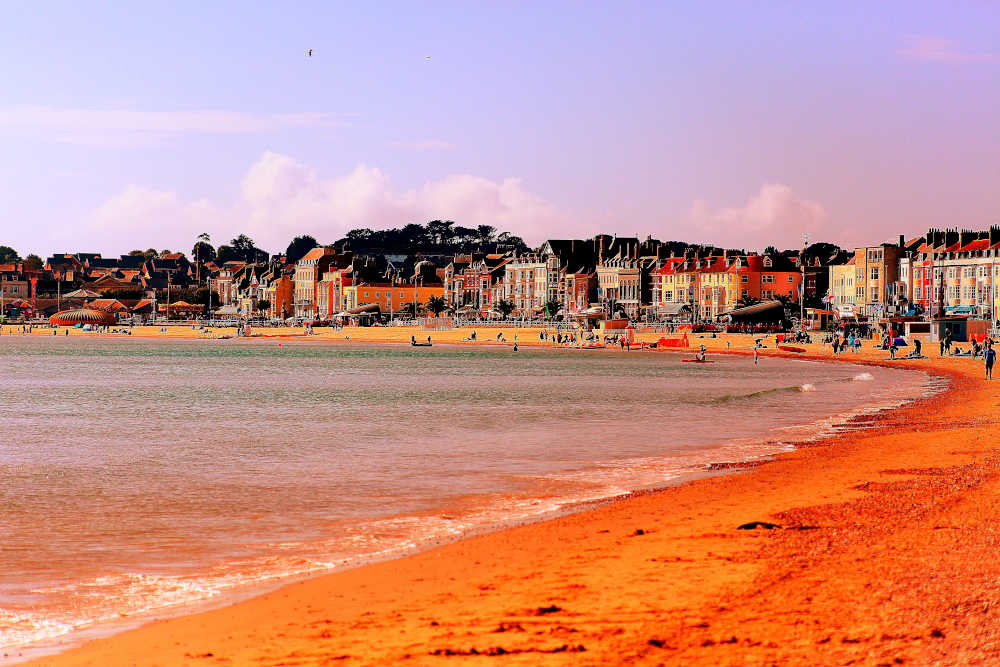
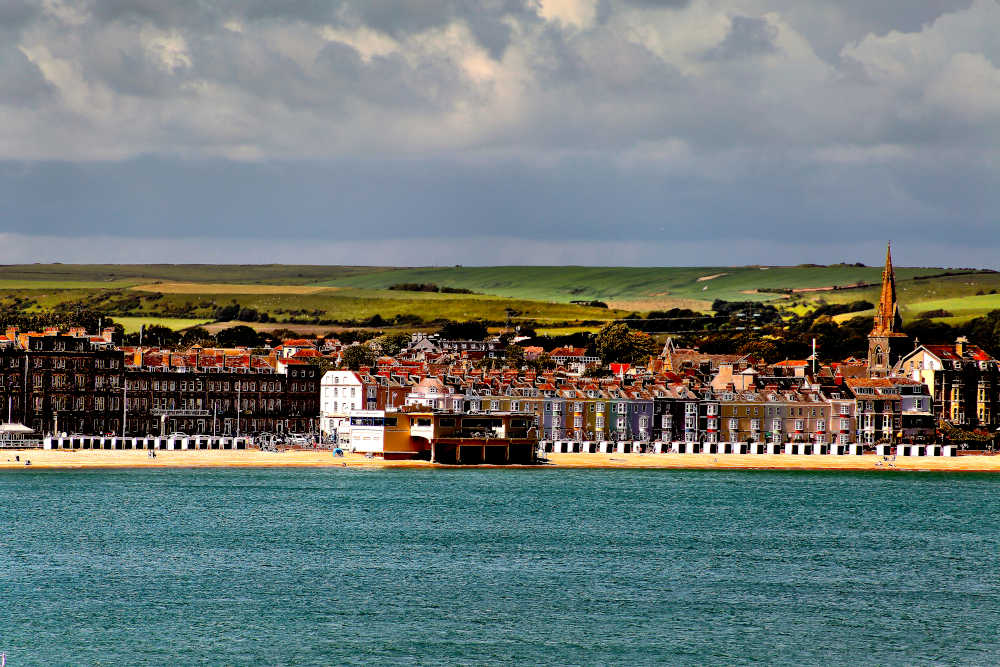
Stand on Weymouth seafront today and much of the view would be instantly recognisable to somebody who visited the town generations ago.
The sweep of the Georgian Esplanade is still there. The harbour is still at the heart of the town. The old fishermen's cottages still stand beside the water, and the Nothe continues to look across Weymouth Bay.
But look more closely and another Weymouth begins to appear - a town of old piers, dance halls, traditional beach huts, pedallos, ferry boats, seaside attractions and buildings that have gradually disappeared.
Some of these changes happened decades ago. Others are within living memory.
A child who enjoyed Weymouth holidays in the 1950s would find plenty that they recognised today, but also much that they would search for in vain. Even somebody who remembers the town of the 1980s or 1990s would find parts of today's Weymouth surprisingly different. Some familiar places and attractions have disappeared, while others have changed beyond recognition and new ones have taken their place. Yet many of the features that have defined Weymouth for generations are still here, providing a link between the town of today and the Weymouth remembered by those who came before us.
This is the story of Lost Weymouth - the things that have disappeared, the things that have changed and the parts of the town that, remarkably, have survived.
Weymouth Then and Now
From the 1930s to the present day, Weymouth has seen enormous changes to its buildings, attractions, entertainment and seaside traditions.
- The old Pier Bandstand and its seaward pavilion
- The traditional seaside dance halls and entertainments
- Pedallos on Weymouth Beach
- The old red, white and blue beach huts
- The traditional seafront "fairy lights"
- Timewalk and the Deep Sea Adventure
- The old fire station and changing harbour buildings
- The Condor ferry service
- The changing role of the Nothe Fort
Weymouth in the 1930s
In the 1930s, Weymouth was already an established seaside resort, but it was a very different town from the one we know today.
Visitors arrived by train, stayed in hotels and guest houses and spent their holidays enjoying the attractions of a traditional British seaside resort. The beach, harbour, promenade and pier were at the centre of the experience.
The town had also developed an impressive collection of entertainment and leisure facilities during the first decades of the twentieth century.
In 1939, a new Art Deco Pier Bandstand opened on the seafront. It was 200 feet long and could accommodate around 2,400 people. It became one of Weymouth's major entertainment venues, hosting music and dancing as well as amusements, a restaurant and shops in later years.
For somebody arriving in Weymouth during the 1930s, the combination of the Georgian seafront, the beach, the harbour and the new Pier Bandstand would have created a very recognisable seaside scene.
Much of that scene would survive for decades.
But almost none of it would remain completely unchanged.
The Pier That Disappeared
Perhaps one of the most obvious things missing from today's Weymouth is the old Pier Bandstand.
Opened in 1939, the pier projected out from the Esplanade and quickly became an important part of Weymouth's entertainment scene. On summer evenings it was a place for music, dancing and entertainment, while later decades saw amusements, a restaurant and other attractions added to the structure.
By the 1980s, however, the structure was deteriorating badly. A structural report in 1985 concluded that the piles had suffered severe deterioration and that the pier was unsafe. Repairing or rebuilding it was considered too expensive.
In 1986 the decision was taken to demolish it.
The demolition was almost as spectacular as the pier itself had been. The seaward section was eventually destroyed using explosives, with the final blast taking place on 4 May 1986 in front of thousands of spectators.
The entrance building was retained, this small part of the old Pier Bandstand still survives today.
Look at it now and it can be easy to think that it is simply another seafront building. But it is actually the surviving entrance to a pier that once stretched out across the beach. The large pillars still stand beneath it on the beach below although it no longer meets the water.
For today's visitors, it's easy to think that this is how it always was but postwar visitors and those visiting in the 50s, 60s, 70s and 80s would have seen a much more expansive structure, one that would have been one of Weymouth's defining scenes.
The old pier was not simply somewhere to walk out over the sea. It was part of a whole seaside experience.
There were places to eat, amusements and entertainment, and the pier's restaurant and tea-room tradition belonged to an era when sitting beside the sea with a cup of tea was itself part of the attraction.
Imagine, for a moment, that you are visiting Weymouth in the 1950s. You have spent the afternoon walking along the promenade, perhaps stopping to watch the boats in the harbour or wandering along the beach. Now you have found a table in the pier's tea room, looking out across the bay.
In front of you is the familiar sweep of Weymouth Beach, with the Georgian buildings of the Esplanade rising behind it. The sound of the sea mixes with the voices of other visitors and the occasional cry of a seagull. You order a pot of tea and perhaps a slice of cake, and for a few minutes there is nowhere else you need to be.
There is something wonderfully simple about the experience. You haven't come for an elaborate attraction or a high-tech entertainment experience. You have come to the seaside, taken a walk, and now you are sitting overlooking the water with a cup of tea.
For generations of visitors, these were the moments that made a Weymouth holiday memorable.
Today, the view is still there, but the setting has changed. The pier and its tea room are gone, leaving only memories and old photographs to remind us that, for many people, this was once an ordinary part of a day at the seaside.
Today, modern restaurants and cafes have replaced many of those old seaside facilities, but the idea remains remarkably similar: walk along the seafront, look out across the bay, stop for something to eat and watch the world go by.
Dance Halls and Evenings by the Sea
Weymouth's entertainment did not stop when the sun went down.
Dance halls and ballrooms were an important part of seaside life, giving holidaymakers and local people somewhere to spend an evening dancing, listening to music and socialising.
The Pavilion was central to this tradition. The original 1908 Pavilion was destroyed by fire in 1954 and the present Pavilion Theatre opened in 1960, complete with a ballroom. Those mid 1950s visitors would have seen a lot of change at this site.
The style of entertainment has changed enormously since then, but the idea of Weymouth as somewhere to spend an evening enjoying entertainment has never entirely disappeared. The Pavilion Theatre may no longer offer the dances it once did but it is still a popular venue for shows in the town.
What has disappeared is the particular atmosphere of those old dance halls - the bands, the dancing, the formal clothes and the generations of people who remember them as part of their social lives.
The Pedallos
Some of the things that disappear from a seaside resort are not particularly grand.
They are simply the little things that made a holiday feel like a holiday.
For generations of Weymouth visitors, one of those things was the bright yellow pedalo each with its own unique themed name.
Pedalling out across the shallow water in one of the brightly coloured boats was a familiar Weymouth experience. They were a simple attraction, but for children especially, they could be one of the highlights of a day on the beach.
Even the boats had their own local character. Some Weymouth pedalos were named after local landmarks while others used names from the NATO phonetic alphabet.
Today, the beach remains almost exactly where it was, but this season those little boats have disappeared from the familiar Weymouth holiday scene. It is a reminder that Weymouth is constantly changing. Something we see and take for granted one year may not be there the next. The pedalos are a good example of this: as one attraction leaves, another arrives, and the Weymouth of today gradually becomes part of the town's history, just as the attractions remembered by previous generations have become part of ours.
Having seen the pedalos on Weymouth Beach for as long as I can remember, it would never have crossed my mind last year that it might be the last time I would see them there. They had simply become part of the landscape of the beach - something that seemed as though it would always be there. Yet this summer, they are gone, and almost overnight something that had been part of Weymouth's seaside experience for generations has become a memory.
And that is perhaps one of the most interesting things about a changing seaside town. We rarely know when we are experiencing something for the last time. An attraction can seem as permanent as the beach itself, until one year it simply doesn't return.
But change doesn't always mean something disappearing. As the pedalos have left, new attractions have arrived on Weymouth Beach, joining the rides, amusements and other activities that continue to evolve with each generation. Even the new ice cream boat remains part of that constantly changing seaside experience, with new memories being made alongside the old ones.
One day, the attractions that seem completely ordinary to visitors today may themselves become part of a future Weymouth Then and Now - remembered by somebody who says, "I remember when that used to be there."
The Beach Huts Have Changed
The beach huts are a slightly different story because they have not disappeared.
What has disappeared is the particular appearance that many older visitors remember.
Generations of holidaymakers remember the distinctive red, white and blue beach huts that once were dotted around on Weymouth Beach offering a cone of chips or inflatable beach goods.
They became part of the visual identity of the seafront. Alongside the golden sand, colourful deckchairs and traditional seaside entertainments, the huts helped create the Weymouth that appears in so many old holiday photographs.
The beach huts are still there today, but their appearance has changed as new designs have replaced the old ones.
It is a good example of how a town can change without actually losing something completely.
The beach hut survives.
The beach survives.
But someone visiting Weymouth for the first time since the 1990s would immediately notice the difference. The newer beach huts have a more modern appearance and updated facilities, replacing the traditional red, white and blue huts that were once such a familiar sight along the beach. It is not necessarily a case of one being better than the other - simply another example of how Weymouth's seafront has evolved to meet the needs and expectations of a new generation. Where visitors of yesteryear might have looked at a menu offering a cone of chips or ice cream, a can of pop or a paper cup of tea, today's visitors will find more extensive menus, including substantial meals, alcoholic drinks and places to sit and enjoy them.
From Fairy Lights to Lasers
Another change can be seen after dark.
For generations, Weymouth's seafront was associated with its traditional overhead "fairy lights".
The catenary lighting system became a familiar part of the promenade and helped create that unmistakable old-fashioned seaside atmosphere after sunset.
The tradition actually went back much further. Records show fairy-lamp style lighting on the promenade and at Nothe Gardens as far back as the Victorian era, while the more permanent catenary system became established in the 1950s.
By the beginning of the twenty-first century, however, maintaining the old system had become increasingly expensive. The traditional lighting was finally decommissioned in 2011 and replaced by the modern laser lighting display.
The change is a perfect illustration of how Weymouth's seaside character has evolved.
The purpose remains the same - make the seafront look magical after dark.
But the technology has changed from strings of individual bulbs to moving beams of light.
The change was not without controversy. For many people, the traditional fairy lights had been part of Weymouth's identity for decades, and seeing them removed felt like losing another small but important piece of the town they remembered. The old lights had a warmth and nostalgia of their own, creating the sort of traditional seaside atmosphere that is now increasingly difficult to find.
But the replacement laser lights have created something very different. As darkness falls across Weymouth, beams of light sweep across the seafront, illuminating the promenade and creating a striking spectacle that can be seen from across the bay. It is a very different scene from the gentle glow of the old fairy lights, but it can be equally stunning in its own way.
Perhaps, once again, it isn't really a case of one being better than the other. The traditional lights have become part of Weymouth's memories, while the lasers have become part of its present. One created a nostalgic seaside atmosphere; the other creates a modern spectacle. Both, in their own way, have helped make Weymouth's seafront special after dark.
Brewers Quay, Timewalk and the Deep Sea Adventure
For people who remember Weymouth holidays in the 1990s, some of the biggest losses are much more recent.
Brewers Quay became one of Weymouth's major visitor attractions after the former Devenish Brewery was transformed into a shopping and leisure complex in 1990.
Inside was the hard to replace Timewalk, an attraction that took visitors on a journey through Weymouth's history. For many children, it was one of the most memorable things to do on a rainy afternoon.
There was Miss Paws the brewery cat, atmospheric historical scenes and the unforgettable smell and atmosphere of the attraction.
Timewalk opened in 1990 and closed in 2010 when Brewers Quay shut for redevelopment. It never returned.
On the other side of the harbour, the Deep Sea Adventure offered another attraction that belonged to a particular period of Weymouth's tourism history.
For families who remember visiting these attractions, they were more than businesses.
They were part of the holiday routine.
A wet afternoon could mean a trip to Timewalk. A walk around Brewers Quay could occupy an hour or two. Children could explore the attractions while parents looked around the shops.
Today, those memories belong to a Weymouth that no longer exists in quite the same form.
The Old Fire Station and a Changing Harbour
The harbour has perhaps experienced some of the most obvious changes in the town.
Historically, the area around the harbour was a mixture of homes, shops, pubs and some public buildings.
The old fire station was part of this changing landscape.
The station itself was built in 1939, replacing older housing on the site. The building eventually disappeared as this part of the harbour was redeveloped, and newer properties now occupy this particularly enviable stretch overlooking the water. Yet even here, Weymouth's past has influenced its future. The newer buildings have been designed to echo the traditional fishermen's cottages that still line parts of the harbour, showing how the town can change while deliberately retaining echoes of what came before.
It is one of those changes that can be difficult to appreciate unless you have an old photograph to compare with the view today.
The harbour is still there.
The Condor Leaves Weymouth
Some changes are so recent that they barely feel like history at all.
For many Weymouth residents, the Condor is one of them.
For years, the fast ferry was a familiar sight in the harbour and an important link between Weymouth and the Channel Islands. For holidaymakers, seeing the Condor in the harbour could mean the beginning of an adventure - a day trip or holiday to Guernsey, Jersey or one of the other Channel Islands.
Then, in March 2015, Condor Ferries ceased operating from Weymouth and moved its service to Poole. Although the Condor left Weymouth, the service continues from Poole, meaning that day trips and holidays to the beautiful Channel Islands remain something that thousands of holidaymakers can still enjoy.
For those who remember watching the ferry arrive, seeing it manoeuvre into the harbour or perhaps boarding it for a trip to the Channel Islands, its departure marked the end of an era for Weymouth.
Today, the Condor continues to be part of the wider Dorset-Channel Islands travel story, but for Weymouth it has become another example of something that was once an everyday part of the town and is now remembered by those who remember when it was here.
Remember the Condor in Weymouth?
The Condor may have left Weymouth in 2015, but for many people the memories of seeing the ferry in the harbour, watching it arrive or perhaps taking a trip across to the Channel Islands remain.
Did you sail to the Channel Islands from Weymouth Have a memory or photograph you'd like to share? →
The Nothe Fort: Something That Nearly Became Lost
Not everything that has changed has disappeared.
In fact, one of the most important pieces of Weymouth's history came surprisingly close to being lost altogether. Today, it is one of the town's best-known attractions, visited by thousands of people each year. But there was a time when the future of the Nothe Fort looked very different.
Its story is a reminder that preserving the past isn't always straightforward. Buildings can fall into disrepair, their original purpose can disappear and, for a while, it can seem easier to let them go. Thankfully, the story of the Nothe Fort took a different turn.
Today it is one of Weymouth's best-known historical attractions, but somebody looking at the fort in the 1970s would have seen a very different place.
In 1956, the use of fixed guns for coastal defence was abandoned and the fort's guns were scrapped. The military eventually no longer needed the fort and ownership passed to the council in 1970.
The building then fell into dereliction.
It could easily have become another lost piece of Weymouth.
Instead, volunteers from Weymouth Civic Society began restoration work in 1980 and the Nothe Fort Museum of Coastal Defence opened to the public.
The fort survived - but its purpose changed completely.
The soldiers have gone.
The guns have gone.
The military activity has gone.
Yet the building itself remains, allowing today's visitors to experience a part of Weymouth's past that could very easily have been lost.
The Tudor House: Another Piece of Weymouth Nearly Lost
The Nothe Fort isn't the only important piece of Weymouth's history that came close to disappearing. Just a short distance away, another building with a remarkable story is the Tudor House.
Standing quietly among the old streets of Weymouth, the Tudor House is one of the town's most important reminders of its earlier history. Yet there was a time when its future was far from certain and demolition was being considered.
It is easy to look at historic buildings today and assume that they have always been protected. The reality is often very different. As towns change and old buildings become neglected or are considered unsuitable for modern use, demolition can sometimes appear to be the simplest option.
Thankfully, the Tudor House was saved. What might have become another lost piece of Weymouth's past instead survived to become an important part of the town's heritage.
Like the Nothe Fort, its story is a reminder that the buildings we take for granted today have not always been guaranteed a place in Weymouth's future. Without the efforts of those who recognised their historical importance, both could have disappeared and become nothing more than photographs and memories.
Today, the Tudor House and Nothe Fort provide two very different glimpses into Weymouth's past, both having survived periods when their futures looked uncertain.
Two Pieces of Weymouth History That Nearly Disappeared
The Nothe Fort and Tudor House tell an important part of Weymouth's story - not just because they have survived, but because they came close to being lost.
Their survival means that today's visitors can still see and experience parts of Weymouth's history that could easily have disappeared along with so many other buildings and attractions.
The Weymouth That Survived
For all the things that have disappeared, there is another side to the story.
Some of Weymouth's most recognisable features have survived remarkably well.
The Fishermen's Cottages
Around the old harbour, the fishermen's cottages remain a reminder of the town that existed before Weymouth became primarily a holiday resort.
Their small fronts, narrow streets and close relationship with the harbour help preserve the character of the old town.
They have survived while many of the buildings around them have changed use or disappeared altogether.
Stand beside the harbour today and these cottages provide one of the clearest links with the Weymouth of earlier generations. But it isn't just the cottages that line the water that have survived. Walk a little further and you will find historic buildings and streets that preserve much of Weymouth's character, including Trinity Terrace, Trinity Street and the old military houses along Barrack Road.
These are the places that can sometimes be overlooked because they are not necessarily attractions in the traditional sense. They are simply streets and homes that people have lived in for generations. Yet together they form an important part of the historic fabric of Weymouth, giving us a glimpse of the town as it would have looked and felt to those who lived here many decades ago.
Walk through these streets today and you are not simply looking at old buildings. You are walking through parts of Weymouth's history that have survived, past houses where the fishermen and soldiers of many years ago once called home.
The Georgian Seafront
Perhaps the greatest survivor of all is Weymouth's Georgian seafront.
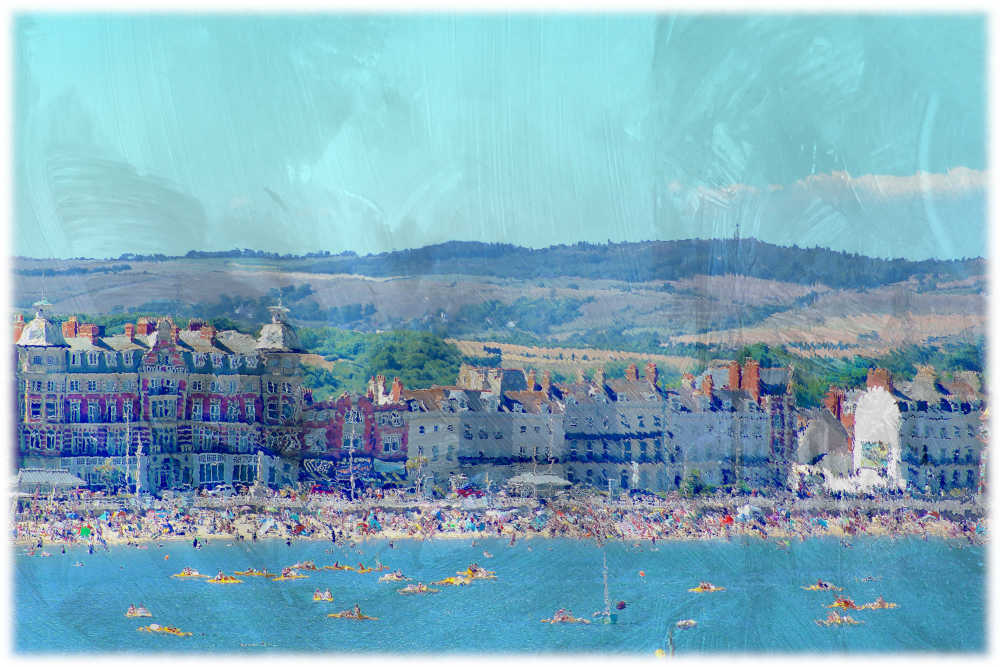
The elegant terraces still form the backdrop to the beach, just as they have done for generations of visitors.
The people standing in front of them have changed. The cars have changed. The shops and businesses have changed.
But the buildings remain.
The Georgian seafront is one of the reasons Weymouth can still feel familiar even when so many of the details have changed.
The Harbour
The harbour itself is another great survivor.
Its role has changed enormously. The large-scale commercial and maritime activities that once dominated the waterfront have declined, while leisure boating, tourism, restaurants and other uses have become increasingly important.
Yet the harbour remains at the heart of the town.
Fishing boats still come and go. People still sit beside the water. Visitors still wander along the quayside and stop to watch the boats pass through the bridge.
In that respect, the Weymouth of today is still recognisably connected to the Weymouth of a century ago.
What Has Really Changed?
Perhaps the most interesting thing about Lost Weymouth is that the town hasn't simply been demolished and rebuilt.
Instead, it has changed layer by layer.
One generation lost its pier.
Another lost its dance halls.
Another remembers the disappearance of the pedallos.
Another remembers the old red, white and blue beach huts.
And a more recent generation remembers Timewalk, the Deep Sea Adventure and the Condor.
Even the lights have changed - from the traditional fairy lights that gave the promenade its old-fashioned glow to the modern laser displays that now illuminate the seafront.
Buildings have been demolished, businesses have closed and attractions have disappeared.
But the fundamental shape of Weymouth has remained.
The beach is still there.
The harbour is still there.
The fishermen's cottages are still there.
The Georgian seafront is still there.
The Nothe still watches over the bay.
And perhaps that is why old photographs of Weymouth can feel so strange. We recognise the town immediately, but then notice all the things that aren't there anymore.
A Town That Is Always Changing
Every generation has its own version of Weymouth.
Someone who remembers the town of the 1930s might have mourned the loss of things that their parents remembered. Someone who grew up in the 1970s might remember a Weymouth that already looked very different from the one their grandparents knew.
And today, we are creating another version of the town that future generations will one day look back upon.
They may wonder what happened to the things that seem completely ordinary to us now.
Perhaps they will look at photographs of today's seafront and ask where the attractions went, why the buildings changed and what it was like to spend a summer day in Weymouth before another generation transformed it.
That is the strange thing about places like Weymouth.
The town changes constantly, yet somehow remains the same.
The pier may disappear. The ferries may leave. The lights may change and the beach huts may be replaced.
But the sea keeps coming in.
The harbour keeps filling and emptying with the tide.
The Georgian buildings continue to look across the bay.
And somewhere along the seafront, another generation of children is making memories that may one day become Lost Weymouth.
Traditions That Still Remain
Not all of Weymouth's history can be found in old buildings. Some of it is still being lived today.
Walk along the harbour on a summer's day and you will still see one of the simplest and most enduring Weymouth traditions - crabbing. Children sitting beside the harbour wall with a line, bait and a bucket are continuing a pastime that generations before them -.
It is a wonderfully simple tradition, requiring little more than a piece of bait, a line and a little patience. Yet for many people who grew up in Weymouth, crabbing is as much a part of childhood memories as the beach, ice cream and paddling in the sea.
And it isn't only childhood traditions that have survived. Along the harbour and seafront, there are still people carrying on occupations and traditions that have been part of Weymouth life for generations.
The Ferry Man and the Sandman are particularly good examples. Their work is part of the fabric of Weymouth's continuing traditions that have been passed down through generations.
For a visitor, these may seem like ordinary parts of a day in Weymouth. But look a little closer and they represent something much more important - a living connection with the town's past, a tradition that has continued for generations.
Buildings can be restored and museums can preserve objects, but there is something special about seeing a tradition continue because people are still doing it today.
The Weymouth of a hundred years ago has largely disappeared, but not everything has been left behind. Some traditions have adapted, some have changed and others have simply carried on, quietly linking one generation with the next.
Do You Remember Lost Weymouth?
Do you remember something that Weymouth no longer has? Perhaps you remember the old pier, the red, white and blue beach huts, pedallos on the beach, the traditional fairy lights, Timewalk, the Deep Sea Adventure or watching the Condor leave the harbour.
Perhaps you remember something we've missed completely.
Maybe you have other memories or photos of Weymouth.
Do You Have a Weymouth Memory to Share?
Much of Weymouth's history survives not only in its buildings, but in the memories of the people who have lived here, holidayed here or watched the town change over the years.
Do you have a memory, old photograph or story about Weymouth that you'd like to share? Perhaps you remember one of the places mentioned in this article, or something else that has disappeared from the town.
Share your Weymouth memory with us → Or email us at [email protected].


