

Take a Little Piece of Dorset Home
Love exploring Weymouth and Dorset? Take home beautiful coastal photography, digital artwork and local prints from my Folksy store.
Prices start from just £8.50 and include Weymouth Harbour, Weymouth Beach, Portland, Dorset landscapes and many more local scenes.
Shop All Dorset Prints →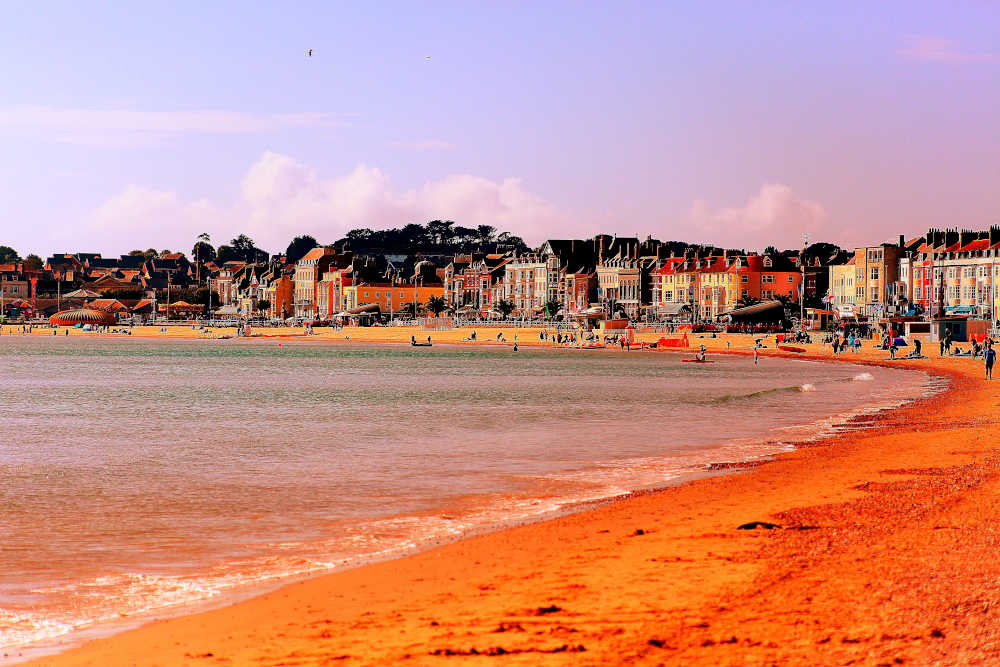



Portland Harbour & Breakwater Guide
Portland Harbour is one of the most fascinating coastal landmarks in Dorset and one of the largest man-made harbours in the world. Sitting between Weymouth, Portland and Chesil Beach, the harbour combines dramatic coastal scenery, military history, Victorian engineering and some of the best sea views in the area.
Today visitors can see the vast Portland Breakwaters, historic harbour forts, sailing boats, cruise ships and even the location where the remains of a deliberately sunk warship rests between the harbour walls.
 Portland Breakwater zoomed in from Newtons Cove.
What Is Portland Harbour?
Portland Harbour takes advantage of the natural protection offered by Weymouth, Portland and Chesil Beach. While the harbour had been used as a natural refuge for ships for centuries, the Victorians transformed it into one of Britain's most important naval harbours.
Massive breakwaters were constructed during the 19th century to create the protected harbour seen today. At the time, Portland Harbour became the largest man-made harbour in the world and remains the largest man-made harbour in the UK.
Today the harbour is used by sailing clubs, commercial vessels, fishing boats, visiting cruise ships and watersports enthusiasts.
Building the Portland Breakwaters
Although Portland Harbour had provided natural shelter for ships for centuries, it remained vulnerable to rough seas and enemy attack. In the mid-1800s, the Victorians transformed the harbour into one of the most ambitious engineering projects in Britain.
Construction of the Portland Breakwaters began in 1849 under Prince Albert and continued for decades. Huge quantities of Portland stone were quarried from the island and transported to create the vast protective walls that still shield the harbour today.
Much of the labour came from prisoners held at Portland Convict Prison, many of whom worked in extremely harsh conditions in the island's quarries. Their labour helped create what was once the largest man-made harbour in the world.
The breakwaters transformed Portland Harbour into one of Britain's most important naval bases and changed the history of Weymouth and Portland forever.
Visitors can still learn more about the quarry workers and convict labour at Nothe Fort, where displays explain how Portland stone helped build the harbour defences.
Portland Breakwater Fort
One of the harbour's most unusual landmarks is Portland Breakwater Fort, built during the 19th century to defend the harbour from naval attack.
The fort sits on the outer breakwater and is not open to the public, but it can often be seen from places such as Newton's Cove, Nothe Gardens and parts of the Rodwell Trail.
Another smaller defensive structure, the Inner Pierhead Fort, also sits within the harbour.
Portland Harbour Forts & Defences
Portland Harbour has been protected for centuries.
- Portland Castle - Built by Henry VIII in 1539 and now operated by English Heritage.
- Sandsfoot Castle - Built at the same time on the Weymouth side of the harbour.
- Nothe Fort - Victorian coastal fort overlooking Weymouth Bay.
- The Verne Citadel - Large defensive fort high on Portland.
- Verne High Angle Battery - Built to strengthen harbour defences.
- Breakwater Fort - Located on the outer harbour wall.
Few places in Dorset have such a concentration of military history.
HMS Hood Wreck
During World War One, Portland Harbour was considered vulnerable to submarine attack.
To help block enemy submarines from entering the harbour, the older 1891 HMS Hood was deliberately scuttled between the breakwaters.
On calm days, the dark outline of the wreck can still sometimes be seen in the water between the harbour walls.
This ship should not be confused with the later HMS Hood that was sunk by the German battleship Bismarck during World War Two.
Imagine Watching HMS Hood Being Scuttled During World War One
Imagine standing on the cliffs above Weymouth or Portland Harbour during World War One, looking out across what had always felt like one of Britain's safest natural harbours.
For generations, local people had watched fishing boats, merchant vessels and Royal Navy ships move peacefully through the harbour. But now everything feels different. Europe is at war and rumours of German submarines attacking British ships dominate local conversation.
Word spreads quickly through Weymouth and Portland that the ageing HMS Hood is going to be deliberately sunk between the breakwaters to block enemy submarines from entering the harbour.
You join other locals gathering along the coastline to watch. Naval vessels escort the old warship into position while workers and sailors prepare for the final operation. There is a strange silence as people realise what they are witnessing - the deliberate sinking of a Royal Navy ship in Dorset waters.
When HMS Hood finally begins to sink beneath the surface, the reality of war suddenly feels much closer to home. This is no longer something happening in distant seas or foreign countries. The harbour that has always provided safety now feels vulnerable.
Long after the ship disappears beneath the water, the dark outline of the wreck remains hidden between the breakwaters - a permanent reminder of the fear and uncertainty felt by local communities during wartime.
Portland Harbour During World War Two
Portland Harbour played a major role during World War Two and became an important military base.
American troops used the harbour during preparations for D-Day and the area was heavily bombed throughout the war.
One of the most famous wartime events involved HMS Foylebank in 1940, when sailor Jack Mantle remained at his gun despite being mortally wounded. His bravery earned him a posthumous Victoria Cross.
Shipwrecks Around Portland Harbour
While Portland Harbour offered shelter to thousands of ships, the waters around Portland Bill and Chesil Beach were far less forgiving.
For centuries, storms, thick fog and dangerous currents caused numerous wrecks along this stretch of coastline. Many ships that failed to reach the safety of Portland Harbour were lost on Chesil Beach or wrecked on the rocks around Portland Bill.
Even today, this coastline remains famous for its maritime history and underwater wreck sites.
If you're interested in the dramatic stories of local shipwrecks, explore our full guide to Weymouth shipwreck history.
Portland Harbour Today
Today Portland Harbour has evolved from a major naval base into one of Dorset's busiest leisure and tourism harbours.
Cruise ships regularly visit Portland Port, bringing thousands of visitors to Weymouth and Portland throughout the year.
The harbour is also home to Portland Marina, sailing clubs, paddleboarding, windsurfing and watersports. During the 2012 Olympic Games, Portland Harbour and Weymouth Bay hosted Olympic sailing events.
From military stronghold to tourist gateway, Portland Harbour continues to play an important role in Dorset life.
- Cruise ships regularly visit
- Sailing clubs use the harbour
- Windsurfing and watersports are popular
- Fishing boats operate from the harbour
- Visitors enjoy some of Dorset's best sea views
Portland Harbour Timeline
- 1539: Henry VIII orders Portland Castle and Sandsfoot Castle to defend the harbour.
- 1849: Construction begins on the massive Portland Breakwaters under Prince Albert.
- 1800s: Convict labour from Portland Prison helps quarry stone used to build the harbour walls.
- Late 1800s: Breakwater Fort and other harbour defences are completed.
- 1914-1918: HMS Hood is scuttled during World War One to block submarine access.
- 1944: Portland Harbour plays a major role in D-Day preparations.
- 2012: Weymouth and Portland host Olympic sailing events.
- Today: Portland Harbour remains a major marina, cruise destination and tourist attraction.
Things To Do Around Portland Harbour Today
While Portland Harbour was once one of Britain's most important naval bases, today it has become one of Dorset's best areas for sightseeing, watersports and coastal history.
- Visit Portland Castle, one of Henry VIII's best preserved coastal forts with fantastic harbour views.
- Explore the Castletown D-Day Centre, where you can learn how Portland played a huge role in the D-Day landings.
- Walk the Rodwell Trail for views across the harbour, Sandsfoot Castle and Chesil Beach.
- Visit Newton's Cove & Nothe Gardens for some of the best views of the breakwaters.
- Try sailing, paddleboarding, windsurfing and watersports at Portland Marina.
- Watch cruise ships arriving into Portland Port during summer.
Portland Harbour has transformed from a wartime stronghold into one of Dorset's most scenic coastal destinations.
Best Places To View Portland Harbour
Some of the best viewpoints include:
- Newton's Cove
- Nothe Gardens
- The Rodwell Trail
- Sandsfoot Castle Gardens
- Portland Castle
- Chesil Beach
 Sailing boats on swinging moorings in Portland harbour.
 The opening between the Portland Breakwater's seen from the coastpath above Newtons Cove.
Where To Stay Near Portland Harbour
If you're planning to explore Portland for more than a day, there are plenty of places to stay nearby.
- Holiday cottages across Portland with sea views
- Holiday parks on the island
- Guesthouses in Weymouth and Portland close to the harbour
Staying locally gives you easy access to Portland Harbour, Chesil Beach, Portland Bill and Weymouth's historic harbour.
Frequently Asked Questions
Can you visit Portland Breakwater Fort?
No. The fort is currently inaccessible to the public.
Can you see HMS Hood in Portland Harbour?
Sometimes yes - on calm days the outline of the wreck can occasionally be spotted between the breakwaters.
Why was Portland Harbour built?
It was expanded to create a major protected naval harbour for the Royal Navy.
Is Portland Harbour still used today?
Yes. It remains active for sailing, commercial vessels, cruise ships and leisure activities.
Explore More Nearby
For some of the best harbour views, try walking the Rodwell Trail or visit Newton's Cove & Nothe Gardens.
Own a tourism or visitor-focused business?
Reach visitors planning trips to Weymouth and Dorset.
Learn How to Get FeaturedLatest Articles
Discover our newest guides exploring Dorset's history, hidden gems and fascinating places.

The Nothe Fort is a victorian fort now a museum of life in Weymouth during world war II.

The Pirates Graveyard at Church Ope Cove on Portland is found high above Church Ope Cove.

Tyneham Ghost Village is a deserted village.

There are plenty of things to do in Weymouth when it rains and lots more things to do around Dorset too.

Did you know that the Black Death arrived in England in 1348 through the port of Weymouth.

Portland Harbour History, the Portland Breakwaters, the sinking of HMS Hood and Portland at war.