

Take a Little Piece of Dorset Home
Love exploring Weymouth and Dorset? Take home beautiful coastal photography, digital artwork and local prints from my Folksy store.
Prices start from just £8.50 and include Weymouth Harbour, Weymouth Beach, Portland, Dorset landscapes and many more local scenes.
Shop All Dorset Prints →



Ghosts and Dark History of Weymouth: A Walk Through the Town's Haunted Past
Not Just a Story for Halloween
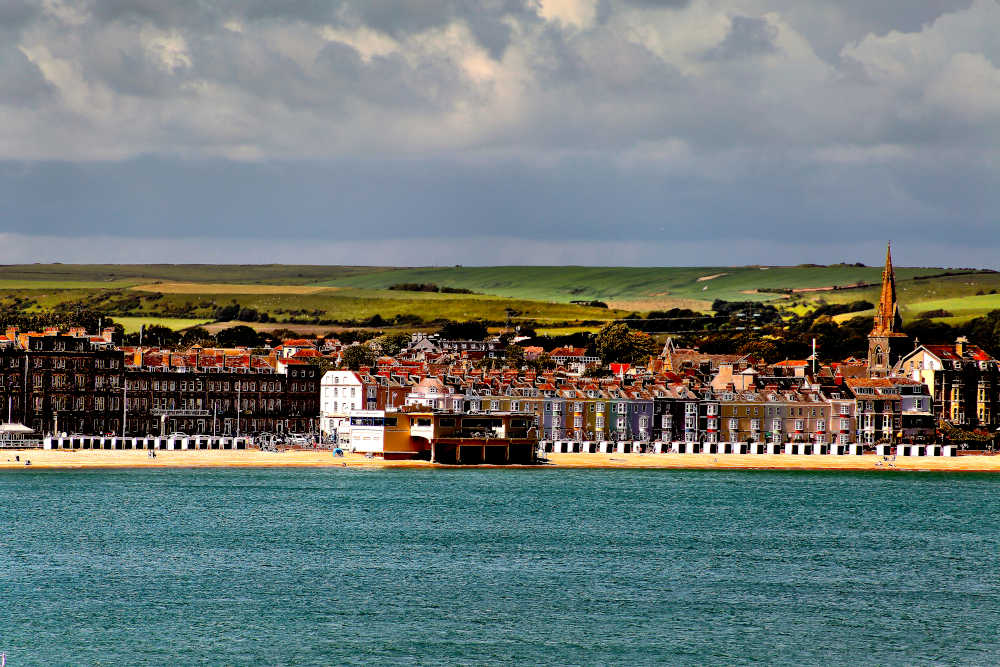
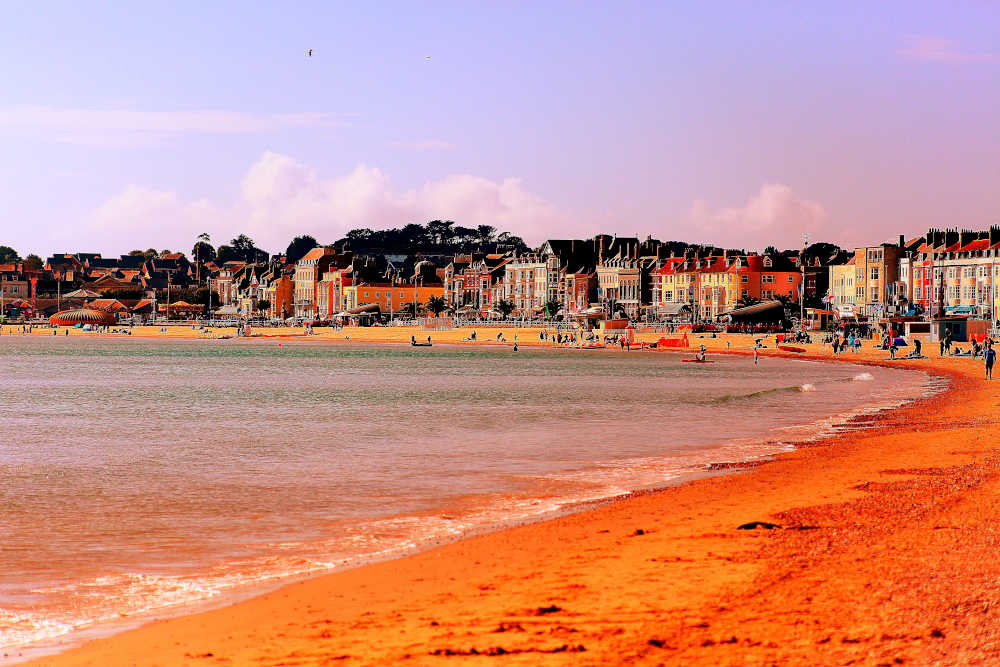
Weymouth is a town of beaches, sunshine, ice creams and summer holidays.
But after dark, when the crowds have gone and the wind comes in from the sea, it can feel like a very different place.
This is the story of Weymouth's dark side - And it isn't just a story for Halloween.
Halloween might be when we naturally start looking for ghost stories, haunted places and the darker side of history, but Weymouth's ghosts and strange tales don't disappear when November arrives. The town's centuries of history are here all year round, waiting to be discovered.
So whether you're visiting Weymouth at Halloween, exploring the town on a dark winter evening, or simply curious about the stories hidden behind its familiar streets, come with us as we explore Weymouth's haunted past and darker history.
Because beneath the modern Weymouth lies a much older town.
A town that has seen plague ships arrive from Europe, Civil War battles fought in its streets, soldiers killed along its harbour, executions carried out on its hills and generations of fishermen, sailors, merchants and ordinary families come and go.
And, according to local stories, some of them may never have left.
So tonight, rather than simply reading about Weymouth's ghosts, let's take a walk through the town together.
The Stone Pier
Imagine yourself standing alone at the end of the Stone Pier.
It is dark.
The cold breeze is coming in across Weymouth Bay and the sea is rolling against the harbour wall. Across the water, the lights of the town shimmer on the water. Ahead is nothing but the darkness of the bay.
Through the centuries, ships carrying plague sailed by here, while pirates have sailed into Weymouth and ransacked the town, leaving fear and destruction in their wake.
Looking into the dark.
You hear the water first.
Then the wind.
And then, perhaps, something else.
A sound that you cannot quite place.
Probably nothing.
Probably.
You turn towards the town.
Let's begin our walk through the darker side of Weymouth.
Standing Around Weymouth Harbour at Night
It is easy to forget just how much history surrounds you.
The harbour has been at the heart of Weymouth for centuries. Ships came here to trade, fishermen made their living from the sea and generations of sailors passed through the town.
But the sea has never been particularly forgiving.
Storms, shipwrecks and drownings were part of life in a historic port. For families who depended upon the water, the sea could provide a living one day and take it away the next.
Perhaps that is why places such as this can feel different after dark.
There are centuries of stories attached to the water.
And somewhere in those stories are people who never came home.
The Fisherman Who Vanished
I started our walk here because I had a strange experience down at the harbour one night myself.
I was walking along the harbour towards the Nothe Fort with someone else, completely oblivious to what was apparently happening in front of us.
Suddenly, the two people we were with told us to move out of the way - there was a man walking towards us.
They described him as looking like a fisherman, heading away from the Stone Pier and towards the Nothe.
We looked up.
There was nobody there.
The people with us were certain they had seen someone walking directly towards us just moments before. Yet there was nowhere obvious for him to have gone. No doorway. No alleyway. No side street where he could have disappeared.
One moment they had seen a fisherman approaching.
The next, he was simply gone.
Could he have been a fisherman from long ago, returning along a route he had walked countless times before?
Of course, there may be a perfectly ordinary explanation. But when you're standing on the harbour at night, surrounded by the same waters and old buildings that generations of fishermen knew, it's an intriguing thought.
Have You Seen the Vanishing Fisherman?
Perhaps this is simply a strange story with an explanation we couldn't see that night. Or perhaps Weymouth's harbour has its own wandering fisherman, still making his way towards the Nothe long after his final voyage.
Have you ever seen him?
If you've had a similar experience, or seen a figure around Weymouth's harbour that seemed to appear or disappear without explanation, we'd love to hear your story.
Email us at [email protected].
Along the Harbour
Continue along the harbour and imagine how different this place would have looked centuries ago.
Some of the buildings around you may have changed. The harbour itself has changed. Parts of the old waterfront have been reclaimed and built over.
Weymouth's history is quite literally beneath your feet.
And some of it is considerably darker than the postcards suggest.
The Battle That Still Echoes
Now imagine Weymouth in the middle of the English Civil War.
It is February 1645.
The town is caught up in the conflict between Parliament and the Royalists. Weymouth had already changed hands during the war, and on the night of 9 February a Royalist force crossed from Portland in an attempt to take the town.
Fighting followed.
Today, it is difficult to imagine a battle taking place around the streets of Weymouth that we know so well.
But local tradition says that the sounds of that battle can still be heard around the streets on this side of the harbour each anniversary.
No soldiers are seen.
Just the sounds of a battle that ended almost four centuries ago.
Imagine walking through the area late at night.
The modern town is quiet.
Then, for a moment, you hear shouting somewhere in the darkness.
The clash of weapons.
The sound of men running.
Then silence.
Perhaps it is only the wind.
But on a February night, on the anniversary of the battle, you might find yourself wondering if it is something else.
What Lies Beneath the Harbour?
There is another reason the old harbour area can feel particularly atmospheric.
The Weymouth you see today is not exactly the Weymouth that existed hundreds of years ago.
The old harbour and historic inlets were altered, filled and reclaimed as the town developed. The original Old Harbour of Weymouth, for example, was eventually buried beneath reclaimed land around what is now Hope Square and Brewers Quay.
That makes it tempting to imagine everything that once happened around those old waterfronts still lying beneath the modern streets.
There are stories of men who died during the Civil War and a local belief that some of the dead may have been buried in areas that were later reclaimed.
But this is an important distinction: there is a difference between what local tradition says and what historical evidence can prove.
We should therefore treat stories of Civil War soldiers remaining beneath today's harbour area as part of Weymouth's folklore rather than established fact.
Even so, the thought is an unsettling one, especially on a cold February night.
You could be standing on a perfectly ordinary modern street, surrounded by cafes, shops and harbour boats, while beneath you lies a landscape that has been repeatedly transformed over hundreds of years.
The Grey Lady of The Tudor House
Leave the harbour behind and make your way towards Trinity Street.
Here stands one of Weymouth's oldest surviving buildings: the Tudor House.
Built around the beginning of the seventeenth century, it stood beside an inlet known as The Ope, where boats could once come close to the house.
Today it is one of the town's most remarkable survivors.
But old houses have a way of collecting stories.
And the Tudor House is no exception.
I've heard local stories of a grey lady associated with the building, with reports of a female figure appearing within the house.
Who she is supposed to be is less certain.
Perhaps she is imagined as one of the women who lived within the building centuries ago. Perhaps the story grew from the atmosphere of the house itself.
Or perhaps, if you believe in such things, someone who once lived here simply never quite left.
Next Time You Walk Down This Street...
Next time you walk past the Tudor House, take a moment to look up at the old windows.
Think about the people who have lived here over the centuries.
Then look again.
Did you glimpse something in an upstairs window?
Perhaps it was simply a reflection. A shadow. Someone passing inside.
Or perhaps, for just a moment, you saw someone who shouldn't have been there at all.
Did you see something? Or perhaps someone?
Weymouth's Darker History
Not every story on our walk needs a ghost.
Some of Weymouth's darkest stories are frightening enough because they really happened.
The Black Death Comes to Weymouth
Almost seven centuries ago, in 1348, Melcombe Regis became associated with one of the most terrible events in English history.
The Black Death arrived in England through this port during the summer of that year, probably carried aboard ships arriving from continental Europe.
There would have been no understanding of bacteria or infection. No antibiotics. No modern medicine.
Instead, people watched neighbours, friends and family members become desperately ill.
The disease spread beyond the port and into the wider country.
Today, the harbour is a place for ice creams, fishing trips and summer walks.
But stand here at night and remember what this waterfront witnessed.
People once arrived here from overseas carrying a disease that would change England forever.
The wind rattles through the sails of the boats on the water.
You stop and listen.
For a moment, you think you hear something else.
But was it the wind?
The Twelve Men of Greenhill
Now leave the harbour and let your mind drift towards Greenhill.
Today, it is one of Weymouth's most beautiful gardens, overlooking the sea.
But in 1785, this was the scene of one of the darkest episodes in the town's history.
Twelve local men involved in the Monmouth Rebellion were executed at Greenhill during the aftermath of the infamous Bloody Assizes.
The sentence was not simply death by hanging.
The men were hanged, drawn and quartered.
It is difficult to reconcile that history with the peaceful Greenhill we see today.
Children play nearby. People walk along the promenade. In the summer, bands play here. The sea stretches out towards the horizon.
But beneath the beauty is a much darker memory.
In 2025, a plaque was installed on the Promenade at Greenhill to commemorate the twelve men and ensure that this part of Weymouth's history was not forgotten.
So when you walk past it, stop for a moment.
Imagine Weymouth in 1785.
Imagine the crowd.
Imagine the fear.
And then look out across the sea and remember how completely a place can change.
What was that sound?
Back Towards the Nothe
Our walk now takes us back towards the harbour.
The lights of Weymouth are beginning to appear again.
The sea is still there.
And beyond the harbour entrance stands the Nothe.
For centuries this headland has looked out over Weymouth Bay and the harbour entrance. But the fort that stands there today is Victorian, built in the nineteenth century to defend Portland Harbour.
And it has one of Weymouth's best-known ghost stories.
The Whistling Gunner of Nothe Fort
Imagine being here after dark.
The thick stone walls surround you.
Somewhere beneath your feet are the underground passages.
There is almost complete darkness.
Then you hear it.
A whistle.
Not the wind.
Not a bird.
A man's whistle.
The Nothe Fort is reputedly haunted by a ghostly gunner whose whistling has allegedly been heard in the fort's underground passages.
There are several different tales about who the Whistling Gunner might have been. One story says he was a gunner who died overseas and somehow returned to the fort. Another claims he was a soldier who was crushed beneath a falling cannon. Another version suggests that he was drunk, lost his footing and fell from the ramparts.
None of these stories can be confirmed, and perhaps the uncertainty is part of what has kept the legend alive.
What we do know is that life for soldiers at the Nothe was far from easy. In the fort's early years, military life was demanding, dangerous and often uncomfortable. Heavy guns, ammunition, cramped underground passages, difficult working conditions and the constant threat of accidents were all part of life for the men stationed here.
So perhaps it isn't surprising that stories grew around the men who served here.
And somewhere in the darkness of the old fort, according to legend, one of them may still be heard whistling.
So if you are ever walking around the Nothe after dark and hear a faint whistle coming from somewhere below...
Don't whistle back.
And if you'd rather investigate the fort for yourself, The Nothe Fort also hosts paranormal nights, giving visitors the chance to explore its darker side after hours and see whether they can experience anything unexplained.
So if you're feeling brave, why not see for yourself?
A Town Built on Stories
By now our imaginary walk has taken us from the Stone Pier, along the harbour, through the old streets, past the Tudor House, towards Greenhill and back towards the Nothe.
We have walked through plague, Civil War, executions, old houses and stories of spirits.
And perhaps that is what makes Weymouth so interesting.
It is not simply a seaside resort.
It is a town built layer upon layer.
Roman connections. Medieval trade. The Black Death. Tudor merchants. Civil War soldiers. Georgian visitors. Victorian soldiers. Fishermen and sailors. Generations of families.
Every generation has left something behind.
Sometimes it is a building.
Sometimes it is a street.
Sometimes it is simply a story.
And sometimes, according to local legend, it is a ghost.
Would You Walk Weymouth After Dark?
So return to where we began.
Stand alone on the Stone Pier.
Listen to the sea.
Feel the cold wind coming across the bay.
Behind you is the modern town.
But just time separates us from the events of centuries before.
Somewhere along the harbour, perhaps a fisherman is still walking towards the Nothe.
Somewhere inside the old Tudor House, perhaps footsteps are moving across an upstairs room.
Somewhere beneath the Nothe Fort, perhaps a lonely gunner is still whistling in the darkness.
Or perhaps there is nothing there at all.
Perhaps the footsteps are the old house settling.
The fisherman was simply someone disappearing around a corner.
The whistle is the wind.
And the sounds of battle are nothing more than the imagination filling the silence.
But next time you walk through Weymouth after dark, you might find yourself listening just a little more carefully.
Because once you know the stories, the old town never quite feels the same again.
Fact or Folklore?
Weymouth's darker stories are a mixture of documented history, local tradition and personal accounts.
The Black Death arriving through Melcombe Regis, the Civil War fighting of 1645 and the executions at Greenhill in 1785 are all part of Weymouth's documented history.
The ghostly soldiers, the Whistling Gunner, the Grey Lady and other apparitions belong to the world of local folklore and reported experiences. There is no historical evidence that proves these figures are actually spirits.
But perhaps that distinction is part of the fascination. History tells us what happened. Folklore tells us what people believe may still remain. Unless you have seen it, heard it, felt it, you never really know
Do You Have a Weymouth Ghost Story?
Have you ever experienced something strange in Weymouth?
Perhaps you've seen a figure that seemed to disappear, heard unexplained footsteps in an old building, felt that you weren't alone, or simply had an experience that you've never been able to explain.
We'd love to hear your old Weymouth ghost stories and personal experiences.
You don't have to believe that it was a ghost. Sometimes the most interesting stories are the ones where there is no obvious explanation.
If you have a story you'd like to share, we'd love to hear it. Your memory could become part of our list and who knows, maybe you may not be the only person to have experienced it.
Email your story to [email protected] with the subject Weymouth Ghost Story.
Own a tourism or visitor-focused business?
Reach visitors planning trips to Weymouth and Dorset.
Learn How to Get FeaturedLatest Articles
Discover our newest guides exploring Dorset's history, hidden gems and fascinating places.

The Nothe Fort is a victorian fort now a museum of life in Weymouth during world war II.

The Pirates Graveyard at Church Ope Cove on Portland is found high above Church Ope Cove.

Tyneham Ghost Village is a deserted village.

There are plenty of things to do in Weymouth when it rains and lots more things to do around Dorset too.

Did you know that the Black Death arrived in England in 1348 through the port of Weymouth.

Portland Harbour History, the Portland Breakwaters, the sinking of HMS Hood and Portland at war.