

Take a Little Piece of Dorset Home
Love exploring Weymouth and Dorset? Take home beautiful coastal photography, digital artwork and local prints from my Folksy store.
Prices start from just £8.50 and include Weymouth Harbour, Weymouth Beach, Portland, Dorset landscapes and many more local scenes.
Shop All Dorset Prints →



Christmas in Victorian Weymouth: A Christmas by the Sea
Christmas in Victorian Weymouth would have been very different from the Christmas we know today. There were no electric lights, television, cars or modern Christmas shopping, and the town itself looked very different from the Weymouth we see today.
But Christmas was still a special time of year, with families coming together, homes being decorated, presents being exchanged and special food prepared for the festive table.
So what might Christmas have been like beside the sea in Victorian Weymouth? Let's step back into the 1800s and imagine Christmas Day in the town as a Victorian family might have experienced it.
Imagine waking up on Christmas morning in Weymouth, sometime during the reign of Queen Victoria.
There are no strings of electric lights glowing along the streets. No cars are passing the harbour. There is no television waiting to be switched on, no mobile phone buzzing with messages and no supermarket open for the forgotten bottle of something you meant to buy yesterday.
Instead, Weymouth wakes to a very different Christmas morning.
The winter sea rolls into the bay. Smoke rises from chimneys across the town, and the smell of wood and coal fires mixes with the salty sea air. Somewhere around the harbour, the unmistakable sound of a horse and cart echoes along the quay, while the bells of a church call people to Christmas worship.
For one day, the ordinary rhythm of Victorian Weymouth changes.
But what would Christmas actually have been like here?
Christmas Morning by the Sea
The first thing you would notice is how different the town sounds.
There is no traffic rumbling along the seafront and no modern Christmas music drifting from shops. Instead there is the sound of horses' hooves on the road, the occasional cry from the harbour and the winter wind coming in from Weymouth Bay.
The harbour would still be recognisably Weymouth, but it was a working harbour as much as a place to stroll. Throughout the Victorian period it was an important centre for shipping and trade, with vessels coming and going and goods being loaded and unloaded along the quays.
And there was another familiar sight.
Horse-drawn carts.
The brewery at Hope Square had been operating for generations and was acquired by William Devenish in 1824. By the Victorian period, the brewery was part of the working life of the harbour area.
On an ordinary day you might have seen brewery carts moving through the town, delivering beer to public houses and other customers. On Christmas morning, however, the pace of the harbour would have been very different.
Some boats would be lying quietly in the harbour while the town observed the festive day, while others may still have had work connected with the port. Christmas did not mean that every working person suddenly had the day off.
For fishermen, sailors, labourers, servants and others whose livelihoods depended upon the sea or the needs of the town, Christmas could still involve work. In some fishing communities, there were strong superstitions surrounding Christmas Day and fishermen would refuse to put to sea, believing it unlucky to fish on the day itself. But such traditions were not universal. For many fishing families, the winter months were among the most important times of the year for making a living from the sea, and Christmas Day could be little different from any other day.
So while some fishermen may have remained ashore to celebrate with their families, others could still have been preparing boats, tending nets or making their way out to sea. Christmas was a day of celebration, but for families whose income depended upon the sea, the needs of winter fishing did not necessarily stop simply because it was Christmas.
The Bells of Christmas
For many Victorian families, Christmas was closely connected with religion.
Churches and chapels played an important part in the life of the town and Christmas Day services would have been an important part of the celebrations for many people.
Imagine walking through Weymouth on Christmas morning and hearing church bells ringing across the town.
Families would put on their best clothes and make their way to church. Some would walk through the streets of Weymouth, while others would cross the harbour towards Melcombe Regis.
St Mary's Church, rebuilt in 1817, stood at the heart of Melcombe Regis and was one of the town's principal places of worship.
For some, Christmas morning would begin with worship before the family returned home for dinner.
For others, particularly those who were working, Christmas would have been a much less leisurely affair.
Christmas Shopping in Victorian Weymouth
Christmas shopping would have looked very different too.
There were no department stores filled with electric displays and no online shopping. Instead, people visited the individual shops and market stalls of the town, buying what they could afford for the Christmas table and perhaps a small gift for someone they loved.
And the shops could certainly put on a show.
Weymouth's butchers would make a particularly impressive display of their Christmas provisions. Local newspaper reports described shops displaying beef, pork and mutton, alongside geese, ducks and chickens.
Imagine walking through Victorian Weymouth and seeing those displays outside the butchers' shops, with Christmas shoppers stopping to look at the food being prepared for the festive tables.
The town's market had also changed during the Victorian period. After the old market around the Guildhall was displaced following the construction of the new Guildhall, a purpose-built market hall opened in St Mary Street in 1855.
Christmas shopping in Weymouth was therefore not simply about buying presents.
For many families, the most important shopping was the food that would make Christmas dinner possible.
What Would You Find in a Victorian Christmas Shop?
For a child, Christmas shopping would have been exciting.
But the presents would be very different from the ones filling today's shops.
Victorian toys could include wooden toys, dolls, toy soldiers, balls, skipping ropes and other simple games. Books were popular gifts, while sweets, fruit and nuts could provide a welcome Christmas treat.
Imagine Christmas Morning in Victorian Weymouth
Imagine you have worked hard all year to make a living. Christmas is not going to be a lavish affair for your family, and there is little money to spare for expensive presents.
But over the past few months, whenever you have found a little free time, you have been making something for your young son.
A simple wooden toy. Perhaps a little cart or a homemade toy on wheels, carefully put together by hand.
It has taken time. You have worked on it in the evenings when you could, quietly preparing it for Christmas morning.
And then Christmas morning arrives.
You watch as your boy unwraps his present and his eyes light up. For him, it is wonderful. He doesn't care that it isn't expensive or that it didn't come from a shop. His father made it especially for him.
Soon he is outside in the street, proudly playing with his new toy, showing it to the other children.
And for a moment, none of the worries of the year seem to matter.
You have given your son something that money could not buy - the memory of a Christmas morning when his father made him a toy and watched him play with it.
Perhaps that is what makes Christmas so special. It doesn't always take a lavish feast or a room full of presents. Sometimes, it is simply seeing someone you love happy.
As the Victorian period progressed, mass production made more toys and Christmas decorations available to the growing middle class, helping to create the Christmas shopping culture that would become increasingly familiar by the end of the century.
Imagine Christmas Shopping in Victorian Weymouth
Imagine walking into Weymouth on the days before Christmas.
The streets are busy with shoppers. There are no cars, but horses and carts make their way through the town. Shopkeepers have decorated their windows and are hoping to attract those looking for something special for Christmas.
You stop outside a butcher's shop and see geese and poultry displayed for the festive trade.
Further along, there are toys, books, sweets and other small gifts in the shops.
You have only a certain amount of money in your pocket.
There is no online shopping. No next-day delivery. No endless choice.
What you buy is what you carry home.
Christmas Decorations by Candlelight
Walk into a Victorian home at Christmas and you might find that it looks surprisingly familiar.
Evergreen branches, holly, ivy and mistletoe could be used to decorate rooms, bringing some colour into the house during the darkest part of the year.
And for families who could afford one, there might be a Christmas tree.
Christmas trees became increasingly fashionable during the Victorian period, helped enormously by the famous 1848 illustration of Queen Victoria, Prince Albert and their children gathered around their decorated tree.
Victorian trees were decorated very differently from ours. Candles provided the light, while small ornaments, ribbons, sweets, fruit and other decorations could hang from the branches.
Imagine the effect in a dark Victorian room.
A small tree illuminated by candlelight would have looked magical.
There were no electric fairy lights. No flashing decorations. Just the warm flicker of candles against evergreen branches.
Christmas in Victorian Times
Take a glimpse into the atmosphere of a Victorian Christmas before continuing our journey back through Christmas in Weymouth.
Christmas Dinner in Victorian Weymouth
Christmas dinner would have depended enormously on which Victorian family you were sitting with.
For a wealthy household, Christmas could be a magnificent feast.
Turkey was increasingly associated with the Christmas table, while beef, goose and other meats were also enjoyed. There would be vegetables, mince pies and Christmas pudding, perhaps followed by nuts, fruit and other treats.
In a prosperous house there might also be servants preparing the meal, bringing dishes from the kitchen and clearing the table afterwards.
But Christmas looked very different in a poorer home.
For working-class families, the cost of a large Christmas meal could be a significant burden. Goose was often more affordable than turkey, and some families joined savings schemes such as goose clubs, paying small amounts throughout the year towards their Christmas bird.
A family might have very little by modern standards, but that did not necessarily mean Christmas was forgotten.
A good meal shared together could be the most important part of the day.
Were Families Together at Christmas?
One of the great changes of the Victorian period was the growing importance of Christmas as a family occasion.
The expanding railway network made it increasingly possible for people who had moved away for work to return home for Christmas.
Weymouth itself gained a railway connection in 1857, linking the town more closely with the wider world.
Imagine a Victorian family waiting for a relative to arrive home for Christmas.
Perhaps a son who had found work elsewhere has returned to Weymouth. Perhaps a daughter who has gone into service is able to come home for a short visit.
But not everyone could simply take Christmas off.
Domestic servants, harbour workers, fishermen, inn workers and many others might still have responsibilities on Christmas Day or during the festive period.
For a servant working in a wealthy household, Christmas could mean helping to prepare the family's celebrations rather than sitting down with their own family.
Even so, Christmas increasingly became associated with family, generosity and spending time together - ideas that remain at the heart of Christmas today.
Christmas Afternoon on the Seafront
After dinner, perhaps you would step outside.
There would be no Christmas television to keep everyone indoors.
Instead, a walk might be just what the family needed.
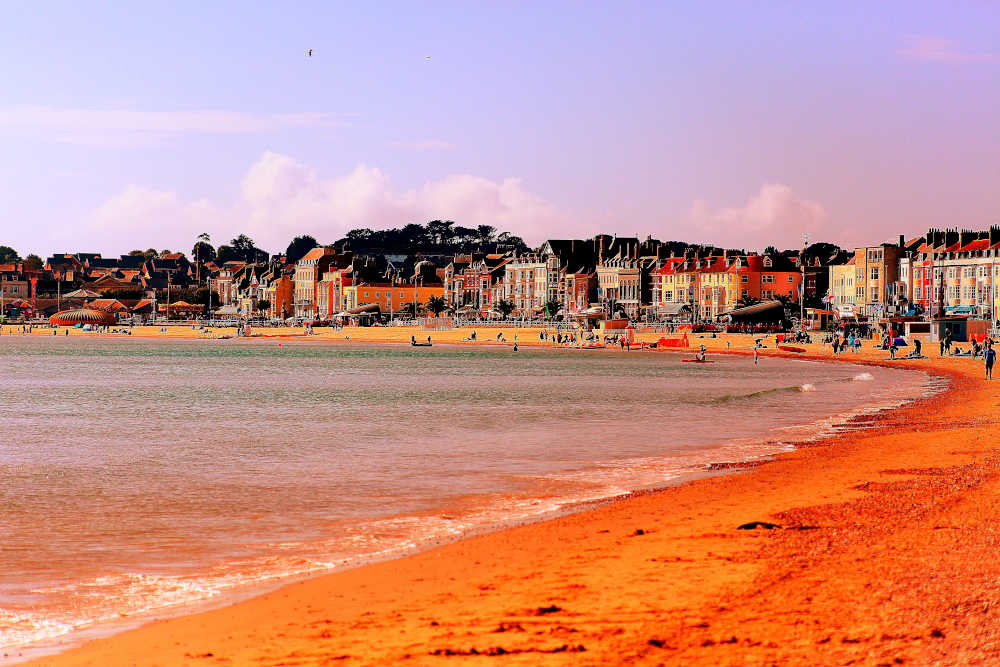
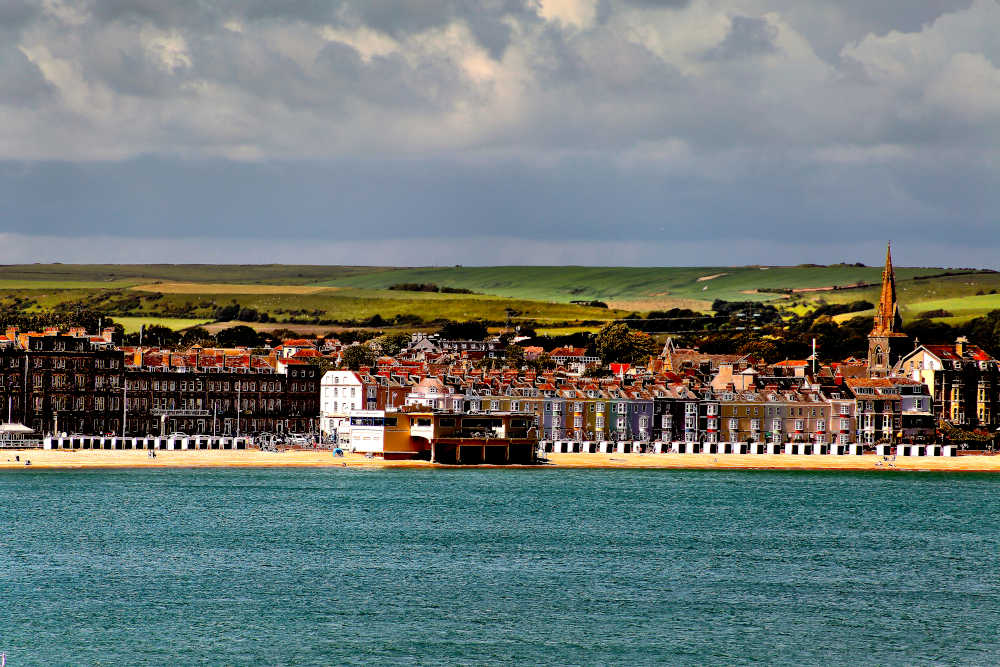
Weymouth's great sweep of seafront would still be there, although the atmosphere would be very different from the summer crowds we know today.
The winter sea would roll into the bay and the wind would come across the water. The grand terraces would look out over a much quieter beach.
Perhaps you would walk along the Esplanade, look across the bay towards Portland or make your way towards the harbour.
For a town so closely connected with the sea, Christmas by the water must have had a particular atmosphere.
The same sea that provided work and food for generations of Weymouth families was also the backdrop to their Christmas Day.
Christmas Evening Without Television
Eventually the light would disappear.
There would be no Christmas lights illuminating the streets and no television waiting inside.
Instead, the family would gather around the fire.
There might be games to play, books to read, stories to tell or music to make. A family with a piano might gather around it, while others might simply talk after the Christmas meal.
Children could play with their new toys while adults enjoyed a drink and conversation.
If there was a Christmas tree, its candles would provide a warm glow in the room.
And eventually, after a long Christmas Day, the household would begin to quieten down.
Because tomorrow was another day.
For some people, Boxing Day would bring more celebrations and visiting. For others, it meant returning to work, tending animals, reopening businesses or getting back to the ordinary routines of life. For many Victorian workers, the Christmas holiday was a short one, much as it is for some people today. Shop workers, servants, publicans, transport workers and others whose jobs continued through the festive period could find themselves back at work soon after Christmas Day.
Christmas might have provided a precious day or two away from the ordinary routine, but before long it was time to return to work and carry on making a living.
A Christmas in a Very Different Weymouth
Perhaps the most striking thing about a Victorian Christmas in Weymouth is that, underneath all the differences, some things would feel remarkably familiar.
People still wanted to make Christmas special.
They decorated their homes. They bought presents when they could. They prepared special food. They visited family. They went to church. Children looked forward to Christmas morning.
They gathered around tables and shared meals.
They laughed, played games and told stories.
And they looked out towards the winter sea.
The town around them was very different. The harbour was busier with working vessels, horses and carts moved through the streets, and the modern seafront we know today was still decades away.
But Christmas had already begun to become something recognisable.
A time when ordinary life could be put aside for a little while and families could come together.
So, if you could walk back through Victorian Weymouth on Christmas Day, perhaps that is what would surprise you most.
Not how different Christmas was.
But how much of Christmas was already the same.
Christmas in Weymouth Through the Years
Today we celebrate Christmas with television, electric lights, Christmas markets, packed shops and all the modern traditions that have become part of the festive season.
But Weymouth has celebrated Christmas for generations.
From Victorian families gathered around candlelit Christmas trees to today's Christmas by the sea, the town's traditions have changed - but the desire to spend time together has remained.
Do You Remember Christmases Long Ago?
We're looking back at Christmas in Victorian Weymouth, but we'd love to hear about your own memories of Christmas in Weymouth and Dorset.
Do you remember Christmases from your childhood? Perhaps old Christmas lights, presents under the tree, Christmas shopping in the town, family gatherings, Christmas dinner, seaside walks or traditions that have since disappeared.
Whether your memories are from the 1940s, 1950s, 1960s or more recently, every memory helps tell the story of Christmas in our local area.
If you'd like to share a memory, email [email protected] with the subject Weymouth Christmas Memories, or share your memories with Just Weymouth.
Your memories could help preserve the Christmases of yesterday for future generations.
Own a tourism or visitor-focused business?
Reach visitors planning trips to Weymouth and Dorset.
Learn How to Get FeaturedLatest Articles
Discover our newest guides exploring Dorset's history, hidden gems and fascinating places.

The Nothe Fort is a victorian fort now a museum of life in Weymouth during world war II.

The Pirates Graveyard at Church Ope Cove on Portland is found high above Church Ope Cove.

Tyneham Ghost Village is a deserted village.

There are plenty of things to do in Weymouth when it rains and lots more things to do around Dorset too.

Did you know that the Black Death arrived in England in 1348 through the port of Weymouth.

Portland Harbour History, the Portland Breakwaters, the sinking of HMS Hood and Portland at war.